Can You Dehydrate Food in a Toaster Oven
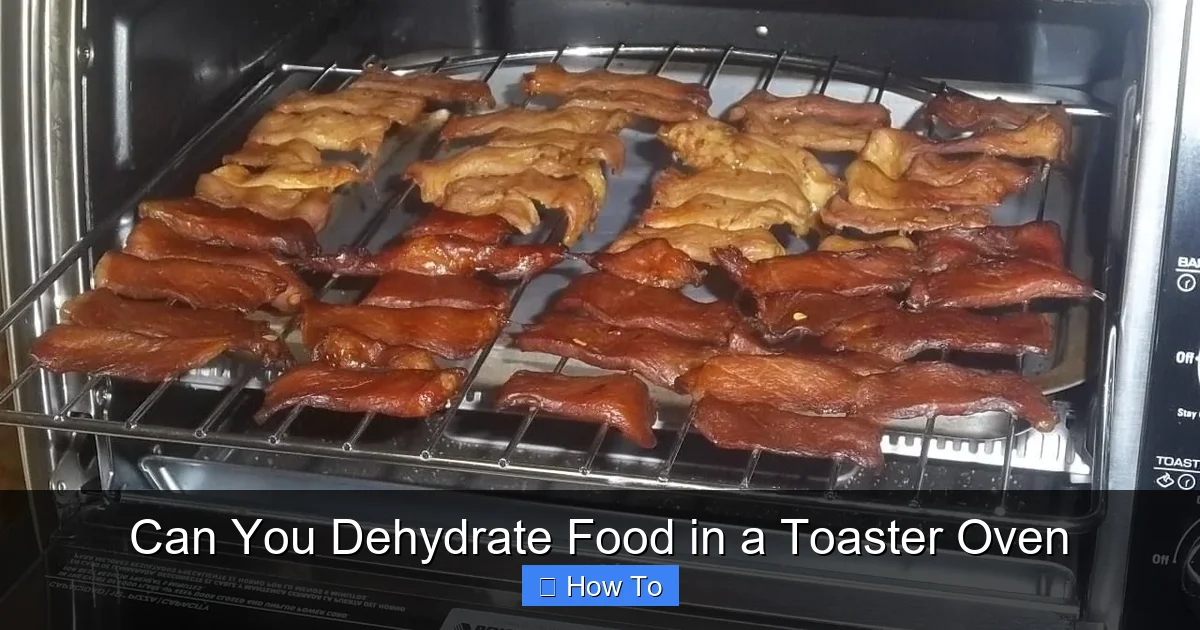
Yes, you can dehydrate food in a toaster oven, as long as it has a low temperature setting and a bit of airflow. Most models work best for fruit, veggies, and herbs, while jerky needs extra care for safety. With the right racks, temps, and a little patience, your toaster oven becomes a handy little dehydrator.
So you want to make dried mango, apple chips, or a batch of herbs. But you do not own a dehydrator. You look around the kitchen. There sits your toaster oven. Can you dehydrate food in a toaster oven? The short answer is yes. And the results might surprise you.
A toaster oven is basically a small oven. It has a heating element, a temp dial, and racks. That is most of what a dehydrator has too. The main difference is airflow. A dehydrator has a fan that pulls moisture out. A toaster oven usually does not. But you can work around that.
In this guide, you will learn which toaster ovens work best, how to set the temp, and how long each food takes. We will also cover safety, storage, and the mistakes that ruin a batch. Let us get drying.
Key Takeaways
- Yes, it works: You can dehydrate food in a toaster oven if it reaches a low temp, ideally 140°F to 170°F.
- Airflow is key: A convection fan or a cracked door helps moisture escape instead of steaming your food.
- Temp matters most: A model that only goes down to 200°F will scorch herbs and can harden fruit too fast.
- Slice evenly: Uniform 1/8-inch to 1/4-inch slices dry at the same rate and save you time.
- Meat needs care: Heat jerky to 160°F before or after drying to make it safe to eat.
- Expect small batches: A toaster oven holds less than a real dehydrator, so plan on doing a few rounds.
- Store it right: Cool completely, then keep in airtight jars for up to a year in a cool, dark spot.
📑 Table of Contents
- Can You Dehydrate Food in a Toaster Oven?
- What to Look For in a Toaster Oven for Dehydrating
- How to Dehydrate Food in a Toaster Oven: Step by Step
- Best Foods to Dehydrate in a Toaster Oven
- Tips and Tricks for Better Results
- Common Mistakes to Avoid
- Toaster Oven vs. Food Dehydrator
- How to Store Your Dried Food
- Final Thoughts
Can You Dehydrate Food in a Toaster Oven?
Yes, and it works well for many foods. Dehydrating is just low, slow heat plus airflow. Your toaster oven gives you the heat. You add the airflow with a small trick or two.
The catch is temperature range. Most toaster ovens bottom out around 200°F to 250°F. True dehydrating happens between 95°F and 165°F. So you need a model that goes low. If yours stops at 200°F, you can still dry herbs and thin fruit slices. You just have to prop the door open a crack to let heat escape.
Another catch is size. A toaster oven fits maybe one or two trays. A real dehydrator has stacked shelves. So think of your toaster oven as a great tool for small batches. It is perfect for a snack for one, not for a garden haul of twenty pounds of tomatoes.
What to Look For in a Toaster Oven for Dehydrating
Not every toaster oven can dehydrate food in a toaster oven well. A few features make a big difference.
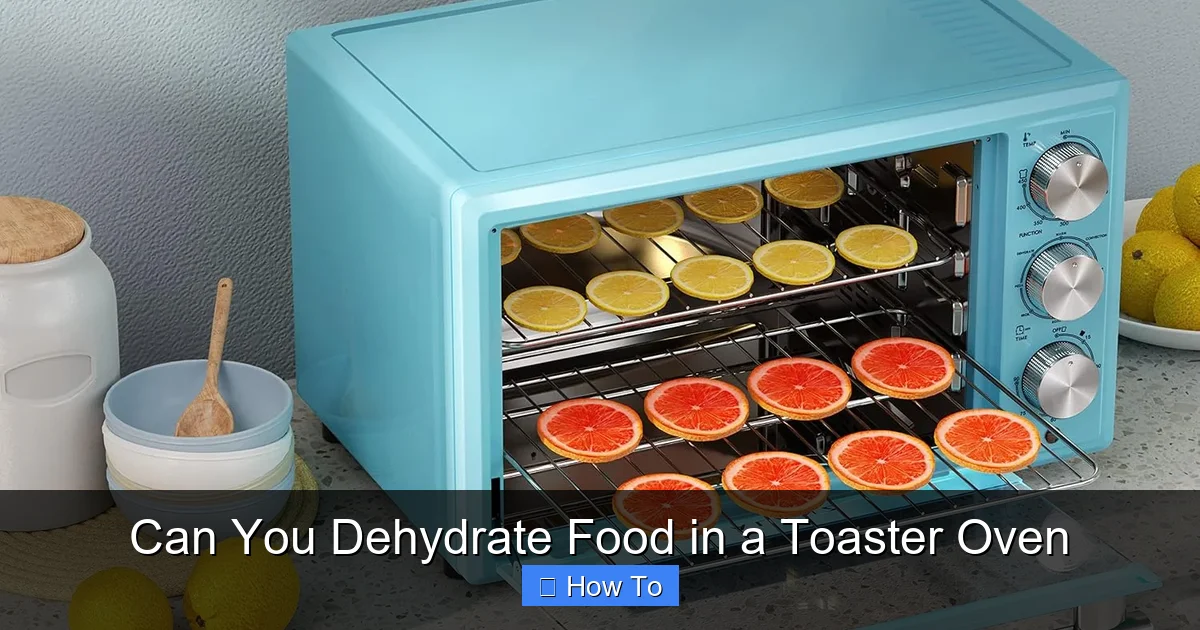
Visual guide about Can You Dehydrate Food in a Toaster Oven
Image source: m.media-amazon.com
A Low Temperature Setting
This is the number one thing. Look for a low end of 140°F to 170°F. That range is ideal for fruit and veggies. Some air fryer toaster ovens go as low as 100°F, which is even better.
A Convection Fan
A fan moves moist air away from the food. Without it, damp air sits inside and your slices steam instead of dry. Convection models dry food faster and more evenly. If you have one, use it.
Room for Racks
You want at least two rack positions. Wire racks are best because air flows under the food too. If your toaster oven came with a solid baking pan, skip it. Use the wire rack or a mesh tray.
A Clear Door and Interior Light
Drying takes hours. Being able to peek without opening the door keeps the heat steady. An oven light is a nice bonus.
How to Dehydrate Food in a Toaster Oven: Step by Step
Ready to try it? Here is the easy process. Follow these steps and you will get crisp, chewy, or leathery results on purpose, not by accident.
Step 1: Prep Your Food
Wash everything. Peel if you like. Then slice evenly. Aim for 1/8 inch to 1/4 inch thick. A mandoline or a sharp knife works great. Uniform slices dry at the same speed, so nothing burns while other pieces are still soft.
For apples, bananas, and pears, dip the slices in lemon juice and water. This stops browning. For veggies, blanch them in boiling water for two to three minutes first. Blanching helps with color and texture.
Step 2: Load the Racks
Lay slices in a single layer. Do not let them touch. Give each piece a little space. Crowded trays trap moisture and slow everything down. Rotate trays if you use two racks.
Step 3: Set the Temp and Time
Start low. Here are good starting points:
- Herbs: 110°F to 120°F for 1 to 3 hours
- Thin fruit slices: 135°F to 145°F for 4 to 8 hours
- Veggies: 125°F to 135°F for 4 to 10 hours
- Jerky: 160°F to 170°F for 4 to 6 hours
Prop the door open about half an inch with a wooden spoon handle or a folded towel. This lets steam out. Check every hour at first.
Step 4: Rotate and Check
Turn the trays front to back every hour or two. Toaster ovens have hot spots near the elements. Rotating fixes that. If one side dries faster, move those pieces to a lower rack.
Step 5: Test for Doneness
How do you know it is done? Take a cooled piece and bend it. Fruit should be pliable and leathery with no wet spots. Veggies should be crisp or brittle. Herbs should crumble when you touch them. Squeeze a piece in your hand. If moisture beads up, keep drying.
Best Foods to Dehydrate in a Toaster Oven
Some foods shine in a small oven. Others fight back. Here is what works.
Fruits That Work Great
Apples, bananas, mangoes, pineapples, strawberries, and kiwis all dry well. Apple chips are the easiest first project. Slice thin, dip in lemon juice, and dry at 140°F for about 6 hours. You get a crunchy snack with no sugar added.
Veggies Worth Trying
Tomatoes, zucchini, mushrooms, peppers, and green beans are good picks. Sun-dried tomatoes from a toaster oven are rich and sweet. Use them in pasta or blend them into a sauce.
Herbs Are the Easiest Win
Basil, oregano, thyme, rosemary, and mint dry fast. Just lay the leaves on the rack at the lowest temp for one to two hours. Crumble and store in a jar. This is the best way to save a garden glut.
Can You Make Jerky?
Yes, but be careful. Raw meat needs to reach 160°F to be safe. So heat the strips to 160°F before drying, or after drying in the oven. Dry at 165°F to 170°F for four to six hours. Use lean meat, slice against the grain, and marinate first.
Tips and Tricks for Better Results
Little changes make a big difference when you dehydrate food in a toaster oven.
Keep the door cracked. This is the top trick. A propped door turns a stuffy oven into a dryer. Just watch the temp so it does not swing too low.
Use a mesh liner or parchment with holes. Food sticks to wire racks. A mesh mat or perforated liner helps. Avoid solid parchment, since it blocks airflow from below.
Blot fruit halfway through. Press slices with a paper towel at the halfway mark. This pulls surface moisture out and speeds things up.
Do not mix wet and dry pieces. Add new slices to a tray of nearly finished food and everything slows down. Dry in batches instead.
Take notes. Write down the temp and time that worked. Every oven runs a little differently. Your notes become your personal recipe.
Keep the window and light on. Watching your food helps you catch a hot spot before it burns a whole tray.
Common Mistakes to Avoid
Most failed batches come from a few simple errors.
Slicing too thick. Thick pieces stay soft in the middle. Keep it thin and even.
Setting the temp too high. High heat cooks the outside before the inside dries. That is called case hardening, and it traps moisture inside. Low and slow always wins.
Crowding the tray. Piled food steams. Single layer only.
Skipping the cool-down. Warm dried food still holds vapor. Let it cool for 20 minutes before jarring it. Otherwise, mold can grow.
Under-drying. If a piece feels cool or damp, it is not done. When in doubt, give it another hour.
Toaster Oven vs. Food Dehydrator
Both work. They just do different jobs. A dehydrator has a fan, more trays, and lower temps. It is better for big batches and for meat. A toaster oven costs nothing extra if you already own one. It is great for small batches, herbs, and testing a new hobby.
My advice? Start with your toaster oven. Dry a tray of apple chips and a handful of herbs. If you love it and want bigger volume, then buy a dehydrator later.
How to Store Your Dried Food
Cool your food completely. Then pack it in airtight glass jars or vacuum bags. Add an oxygen absorber for long storage. Keep jars in a cool, dark cupboard.
Most dried fruit and veggies last six to twelve months. Herbs stay tasty for about a year. Check jars every week for the first month. If you see condensation, the food was not dry enough. Dry it a bit longer.
Final Thoughts
So, can you dehydrate food in a toaster oven? Yes, and it is easier than you think. You need a low temp setting, a wire rack, and a propped door. Slice thin, go slow, and be patient.
Start with herbs or apple chips. They are forgiving and fast. Once you taste your first homemade dried mango, you will be hooked. Your toaster oven is about to earn its counter space all over again.
Frequently Asked Questions
What temperature do you use to dehydrate food in a toaster oven?
Most foods dry best between 125°F and 145°F. Herbs do well at 110°F to 120°F, and jerky needs 160°F to 170°F. If your oven will not go that low, prop the door open a crack to let heat out.
How long does it take to dehydrate food in a toaster oven?
Herbs take one to three hours. Thin fruit slices take four to eight hours. Veggies can take four to ten hours, and jerky takes four to six. Start checking after the first hour and trust the bend test.
Do I need a convection toaster oven to dehydrate food?
No, but it helps a lot. A fan moves damp air away so food dries faster and more evenly. Without a fan, prop the door open and rotate the trays often.
Can you dehydrate food in a toaster oven without a fan?
Yes, you can dehydrate food in a toaster oven without a fan. Just crack the door with a wooden spoon handle, use the lowest temp, and rotate the rack every hour. It takes a bit longer but works fine.
Is jerky safe to make in a toaster oven?
It is safe if you heat the meat to 160°F either before or after drying. That step kills harmful bacteria. Use lean meat, slice against the grain, and dry at 165°F to 170°F.
Why is my food still soft after hours of drying?
Your slices are probably too thick, too crowded, or the temp is too low. Cut thinner, use a single layer with space between pieces, and add an hour or two. Cool a piece and bend it to test again.