Can Tinfoil Go in the Toaster Oven
Using tinfoil in a toaster oven can be risky if not done correctly, potentially causing sparks, fire, or damage to the appliance. This guide explains when it’s safe, how to use foil properly, and what safer alternatives exist for your toaster‑oven recipes.
When you’re standing in the kitchen, a toaster oven can feel like a trusty sidekick for quick meals, reheating leftovers, or baking small batches of cookies. It’s compact, heats up fast, and often uses less energy than a full‑size oven. Yet, one question that pops up again and again is: Can Tinfoil Go In The Toaster Oven? The answer isn’t a simple yes or no; it depends on how you use the foil, the specific model of your appliance, and what you’re trying to achieve. In this article we’ll walk through the science behind foil and heat, outline the risks, give you step‑by‑step safety tips, and suggest practical alternatives so you can cook confidently.
Key Takeaways
- Safety first: Never let foil touch the heating elements or walls of the toaster oven, as this can cause arcing or fire.
- Proper placement: If you use foil, keep it flat, avoid crumpling, and leave at least an inch of space around the edges for airflow.
- Limit usage: Use foil only for short‑time tasks like lining a baking sheet or shielding delicate foods, not for prolonged cooking.
- Consider alternatives: Silicone baking mats, parchment paper, or oven‑safe glass dishes often provide safer, non‑stick results.
- Check your manual: Some toaster‑oven models explicitly forbid foil; always consult the manufacturer’s guidelines.
- Watch for signs: If you see sparks, smoke, or unusual smells, turn off the appliance immediately and remove the foil.
- Clean after use: Foil can leave residue; wipe the interior gently to prevent buildup that could affect future cooking.
📑 Table of Contents
Understanding How Toaster Ovens Work
Before deciding whether foil belongs inside, it helps to know what happens when you turn the dial. Most toaster ovens use two main heating elements: one at the top and one at the bottom. These elements glow red‑hot and radiate heat directly onto the food. Because the cooking chamber is relatively small, the distance between the elements and the interior walls is minimal—often just a few inches. This tight space means anything that conducts electricity or reflects heat can interfere with the elements’ operation.
Aluminum foil is an excellent conductor of both heat and electricity. When a piece of foil gets too close to a heating element, it can draw current and create a mini‑arc, which looks like a tiny spark. In a confined space, that spark can ignite crumbs, grease, or even the foil itself if it’s thin enough. Moreover, foil can block the natural airflow that helps the oven maintain an even temperature, leading to hot spots or undercooked sections.
When Is It Safe to Use Foil?
Despite the risks, there are legitimate scenarios where using foil in a toaster oven makes sense—provided you follow strict guidelines.
Lining a Baking Sheet for Easy Cleanup
If you’re baking cookies, roasting vegetables, or reheating pizza, a simple way to keep the tray clean is to line it with a sheet of foil. To do this safely:
- Cut the foil slightly larger than the baking sheet so it lies flat.
- Press it gently into the corners, but do not let it fold up the sides where it could touch the heating elements.
- Leave at least a 1‑inch gap between the foil’s edges and the interior walls of the oven.
- Never cover the entire rack with foil; leave the center open for air circulation.
Using foil this way mimics the practice you might see in a conventional oven, but the smaller cavity of a toaster oven demands extra caution.
Shielding Delicate Foods from Direct Heat
Sometimes you want to protect the top of a casserole or the edges of a pie from over‑browning while the interior finishes cooking. A loose tent of foil can act as a shield:
- Create a loose dome that hovers above the food, not touching it.
- Make sure the foil is at least 2 inches away from the top heating element.
- Check the food frequently; remove the foil as soon as the desired color is achieved.
This method works best for short bursts—think 5 to 10 minutes—because prolonged exposure increases the chance of the foil heating up enough to cause issues.
When to Avoid Foil Altogether
Certain cooking styles simply aren’t compatible with foil in a toaster oven:
- Broiling: The top element runs at maximum intensity; foil placed near it will almost certainly spark.
- Convection baking with high fan speed: The circulating air can lift loose foil, bringing it into contact with the elements.
- Cooking fatty foods: Grease can drip onto the foil, causing it to smoke or ignite.
- Manufacturer‑prohibited models: Some brands explicitly state “no foil” in the user manual—ignoring this can void your warranty.
Practical Tips for Using Foil Safely
If you decide that foil is the right tool for the job, treat it like a delicate instrument rather than a disposable shortcut. Below are actionable steps you can incorporate into your routine.
Choose the Right Type of Foil
Standard kitchen foil works fine, but heavy‑duty foil offers a bit more resistance to tearing and heat buildup. Avoid the ultra‑thin “sandwich” foil; it can overheat quickly and tear, increasing the risk of contact with the elements.
Pre‑Shape the Foil
Instead of tearing a piece and hoping it stays flat, pre‑shape it on a flat surface:
- Lay the foil on the counter.
- Place your baking tray or dish on top and trace its outline with a pen.
- Cut along the outline, leaving a small margin (about ¼ inch) for overlap.
- Gently press the foil into the tray, smoothing out any wrinkles.
This method reduces the chance of the foil buckling during heating.
Monitor the Cooking Process
Set a timer for shorter intervals than you would in a full‑size oven. For example, if a recipe calls for 20 minutes at 375°F, start checking at 10 minutes. Look for:
- Any signs of sparking or arcing (tiny flashes of light).
- Smoke or a metallic smell.
- Foil that has begun to curl or lift away from the tray.
If you notice any of these, turn off the oven, let it cool, and carefully remove the foil using oven mitts.
Clean Up Promptly
After cooking, let the oven cool completely before wiping away any foil residue. Use a soft, damp cloth; abrasive scrubbers can damage the interior coating. Removing leftover bits prevents buildup that could affect future heating efficiency.
Alternatives to Foil in a Toaster Oven
Many home cooks find that switching to other materials eliminates the worry entirely while still delivering great results.
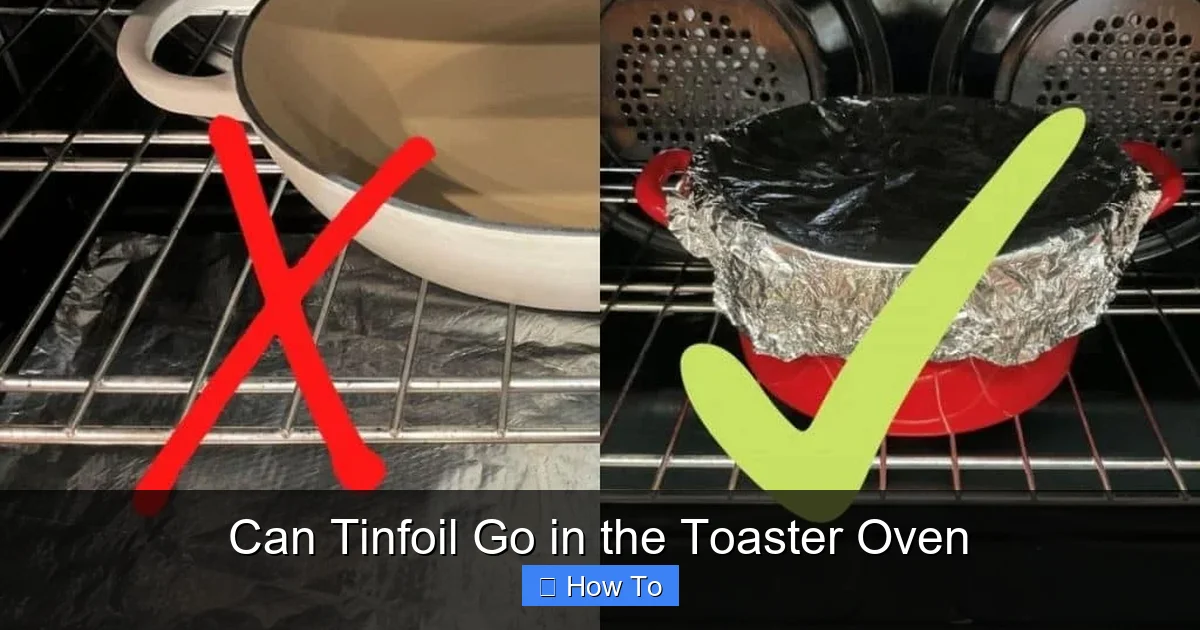
Visual guide about Can Tinfoil Go in the Toaster Oven
Image source: ovenspot.com
Silicone Baking Mats
These reusable mats lie flat on the rack, provide a non‑stick surface, and withstand temperatures up to 450°F—well within most toaster‑oven ranges. They also promote even heat distribution and are easy to clean with soap and water.
Parchment Paper
Parchment is heat‑resistant (typically up to 420°F) and won’t spark because it’s not conductive. Cut a sheet to fit your tray, leaving a little overhang for easy removal. Note that parchment can darken at very high temperatures, so keep an eye on it when broiling.
Oven‑Safe Glass or Ceramic Dishes
If you’re cooking a casserole, lasagna, or a small roast, an oven‑safe glass dish (like Pyrex) can go straight into the toaster oven. Just verify that the dish is labeled safe for the temperature you plan to use. For more details on whether Pyrex is safe in a toaster oven, check our dedicated guide.
Metal Baking Pans with a Non‑Stick Coating
Lightweight aluminum or steel pans designed for toaster‑oven use often come with a perforated base that promotes airflow. They eliminate the need for foil altogether and are easy to slide in and out.
Real‑World Examples: What Works and What Doesn’t
To illustrate the principles above, let’s walk through a few common kitchen scenarios.
Example 1: Reheating Pizza Slices
Goal: Warm a slice without making the crust soggy.
- Foil method: Place the slice on a small piece of foil, fold the edges up just enough to create a shallow tray, and slide it onto the rack. Keep the foil at least an inch from the walls. Heat at 375°F for 4‑5 minutes.
- Alternative: Put the slice directly on the rack or on a pre‑heated silicone mat. The direct airflow crisps the crust while the cheese melts.
Verdict: Both work, but the silicone mat gives a crisper result with zero risk of sparking.
Example 2: Baking a Batch of Cookies
Goal: Evenly baked cookies with easy cleanup.
- Foil method: Line the tray with foil, scoop dough, and bake at 350°F for 8‑10 minutes. Watch closely; the foil can cause the bottoms to brown faster.
- Alternative: Use a silicone mat or parchment paper. Both provide uniform heat and prevent sticking.
Verdict: Silicone mat is the safest and most consistent choice.
Example 3: Roasting Vegetables with a Glaze
Goal: Caramelized edges without the glaze burning onto the tray.
- Foil method: Toss veggies with oil and glaze, spread on a foil‑lined tray, leaving space for air. Roast at 400°F for 15‑18 minutes, stirring halfway.
- Alternative: Use a ceramic baking dish; the glaze will stay contained, and the dish can go straight to the table.
Verdict: The ceramic dish eliminates the need for foil and reduces cleanup.
Manufacturer Guidelines: What the Manuals Say
Every toaster‑oven brand has its own stance on foil. Below is a quick snapshot of what you’ll typically find in the user manuals (always verify with your specific model):
- Breville: Generally permits foil as long as it does not touch the heating elements and is not used for broiling.
- Cuisinart: Allows foil for lining trays but warns against covering the entire rack.
- Hamilton Beach: Advises against foil use altogether due to the risk of arcing.
- Black+Decker: Permits foil for shielding food but recommends removing it after the first few minutes of cooking.
- Panasonic: Explicitly states “do not use aluminum foil” in most of their compact models.
If you’ve misplaced the manual, most manufacturers host PDF versions on their websites. A quick search for “[Brand] toaster oven manual foil policy” will usually give you the answer.
Final Safety Checklist
Before you slide that foil‑lined tray into the toaster oven, run through this quick checklist:
- Is the foil flat and smooth, with no wrinkles or folds that could touch the walls?
- Is there at least a 1‑inch clearance between the foil and all interior surfaces?
- Are you avoiding the broil setting or any function that uses the top element at full power?
- Have you checked your model’s manual for any foil restrictions?
- Do you have a timer set for a short interval so you can check frequently?
- Are you wearing oven mitts and ready to remove the foil immediately if you see sparks or smoke?
If you answer “yes” to all of the above, you’re using foil as safely as possible in a toaster oven.
Conclusion
The question Can Tinfoil Go In The Toaster Oven doesn’t have a universal yes or no answer—it hinges on how you use the foil, the specific design of your appliance, and what you’re cooking. When used correctly—flat, well‑spaced away from heating elements, and only for short, low‑risk tasks—foil can be a handy tool for easy cleanup or shielding delicate foods. However, the risks of sparking, fire, and uneven cooking are real, especially in the confined space of a toaster oven.
For many home cooks, switching to silicone baking mats, parchment paper, or oven‑safe glass dishes offers the same convenience without the safety concerns. Always consult your owner’s manual, keep a vigilant eye while the oven is running, and err on the side of caution. By following the tips and alternatives outlined here, you’ll enjoy delicious toaster‑oven meals while keeping your kitchen safe and your appliance in top shape.
Frequently Asked Questions
Is it ever safe to cover the entire rack with foil in a toaster oven?
No. Covering the entire rack blocks airflow and can cause the foil to overheat, leading to sparks or fire. Always leave at least an inch of space around the edges for proper circulation.
Can I use foil when broiling in a toaster oven?
No. Broiling uses the top heating element at maximum intensity, which makes foil extremely likely to spark or melt. Avoid foil altogether during any broil function.
What should I do if I see sparks while using foil in the toaster oven?
Turn off the oven immediately, unplug it if possible, and let it cool completely. Carefully remove the foil with oven mitts, inspect the interior for damage, and clean any residue before using the appliance again.
Are silicone baking mats a better alternative to foil for toaster‑oven use?
Yes. Silicone mats provide a non‑stick, heat‑resistant surface that won’t spark, promote even heating, and are reusable, making them a safer and more eco‑friendly choice than foil.
Does the type of toaster oven (convection vs. standard) affect foil safety?
It can. Convection models circulate hot air more aggressively, which can lift loose foil and bring it into contact with the heating elements, increasing risk. Always check the manual and keep foil well clear of the fan and elements in convection units.